
 18
Jan,2026
18
Jan,2026
Have you ever picked up a prescription and noticed the pill looks exactly like your brand-name drug-but the box says something completely different? Maybe it’s cheaper, and the pharmacist says it’s a "generic." But is it really the same? This is where authorized generics come in-and why understanding them matters more than you think.
What Exactly Is an Authorized Generic?
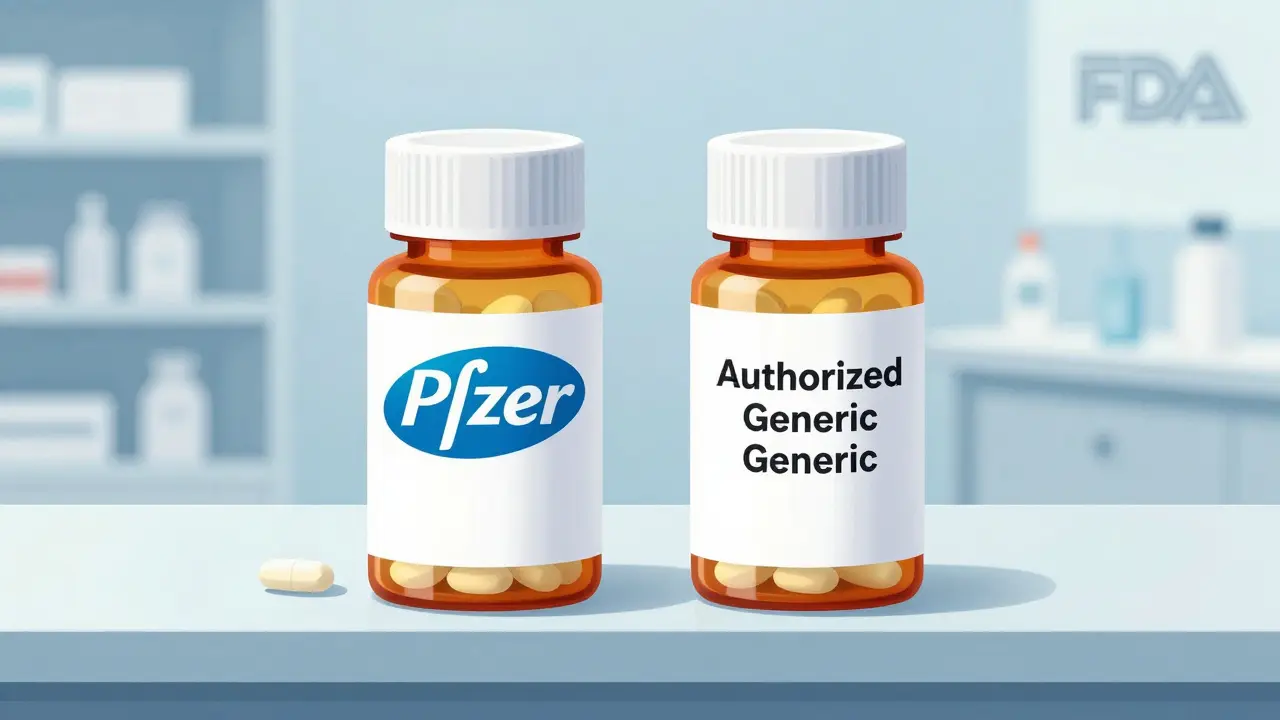
An authorized generic is not a copy. It’s not a look-alike. It’s the exact same drug your doctor prescribed, just sold without the brand name on the label. The FDA defines it clearly: an approved brand-name drug that’s marketed under a different label, with no changes to the active ingredient, inactive ingredients, dosage, or how it’s made. The only difference? The packaging and the name.
For example, if you take Lipitor (atorvastatin), the authorized generic version is chemically and physically identical. Same pills. Same manufacturer. Same factory. Same quality control. The only thing missing is the Pfizer logo. It’s still the same drug, just cheaper.
This isn’t some loophole. It’s built into U.S. drug law. The Hatch-Waxman Act of 1984 created the system for traditional generics, but authorized generics operate under the original brand’s New Drug Application (NDA). That means they don’t need to go through the Abbreviated New Drug Application (ANDA) process. No bioequivalence studies. No extra approvals. Just the same drug, repackaged.
How Authorized Generics Are Made and Who Makes Them
You might assume generics are made by separate companies trying to compete. That’s true for traditional generics. But authorized generics? They’re often made by the brand company itself-or a subsidiary they own.
Take Greenstone LLC. It’s a Pfizer subsidiary that makes authorized generics for dozens of Pfizer brand drugs. Prasco Laboratories and Patriot Pharmaceuticals are other big players. These companies don’t invent new drugs. They take existing brand-name products and repackage them under a different label-sometimes for pharmacies, sometimes for wholesalers.
Here’s how it works: The brand company holds the NDA. When they decide to launch an authorized generic, they notify the FDA using Form FDA 356h. That’s it. No new clinical trials. No new testing. The drug was already approved. They just change the label and sell it under a new name.
This gives them control over timing. They can launch an authorized generic the same day a patent expires-sometimes even before the first traditional generic hits the market. That’s not accidental. It’s a business strategy.
How Authorized Generics Are Different from Traditional Generics
Here’s where things get confusing-and why so many patients don’t know what they’re getting.
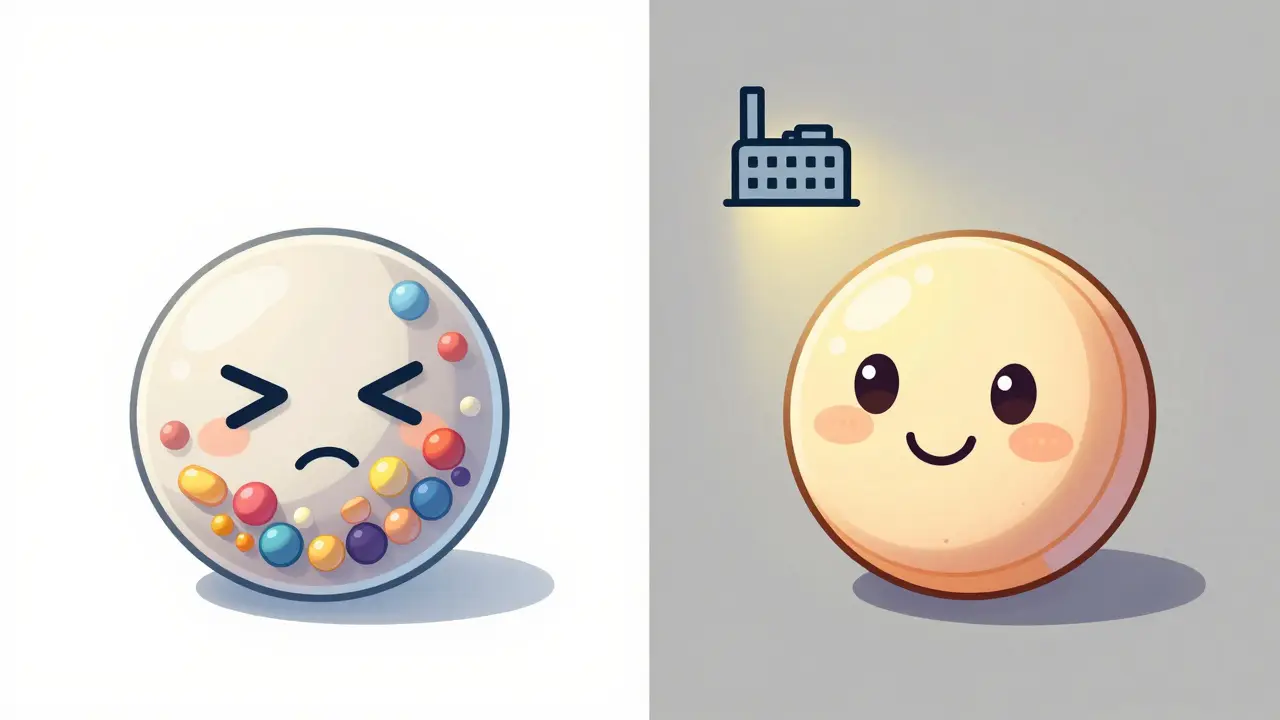
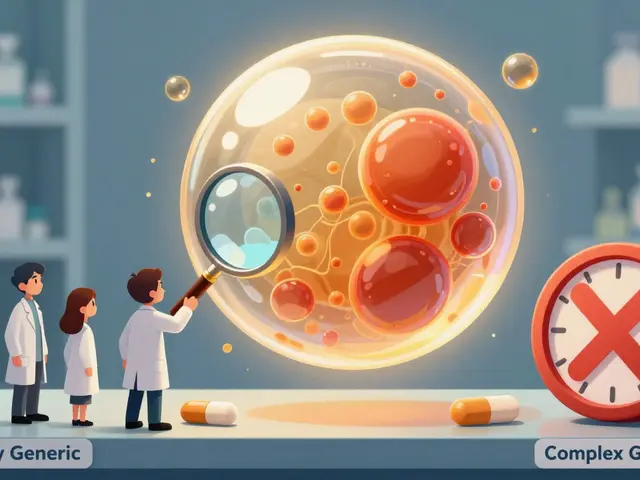
Traditional generics must prove they’re "bioequivalent" to the brand. That means they have to deliver the same amount of active ingredient into your bloodstream at roughly the same speed. But they can-and often do-use different inactive ingredients. Fillers. Dyes. Coatings. Preservatives. These don’t affect the drug’s main action, but they can affect how your body reacts to it.
Some people report side effects with traditional generics that they never had with the brand. A change in dye might cause a rash. A different filler might make a pill harder to swallow. For people with allergies, sensitivities, or complex conditions, these small differences matter.
Authorized generics don’t have that problem. They use the exact same inactive ingredients. Same color. Same shape. Same coating. Same everything. The only thing different is the label.
Another big difference? The FDA’s Orange Book. That’s the official list of approved drugs and their therapeutic equivalence ratings. Traditional generics appear here. Authorized generics? They don’t. Because they’re not approved under an ANDA. They’re covered under the brand’s NDA. So if you’re checking the Orange Book for alternatives, you won’t see them listed.
Why Authorized Generics Are Often Cheaper-but Not Always
Both types of generics cost less than brand-name drugs. But authorized generics often cost even less than traditional generics-sometimes 15% to 30% cheaper than the brand.
Why? Because they don’t need to invest in development, testing, or marketing. The brand company already did all that. They’re just selling the same product under a different name. That saves money. And those savings get passed on.
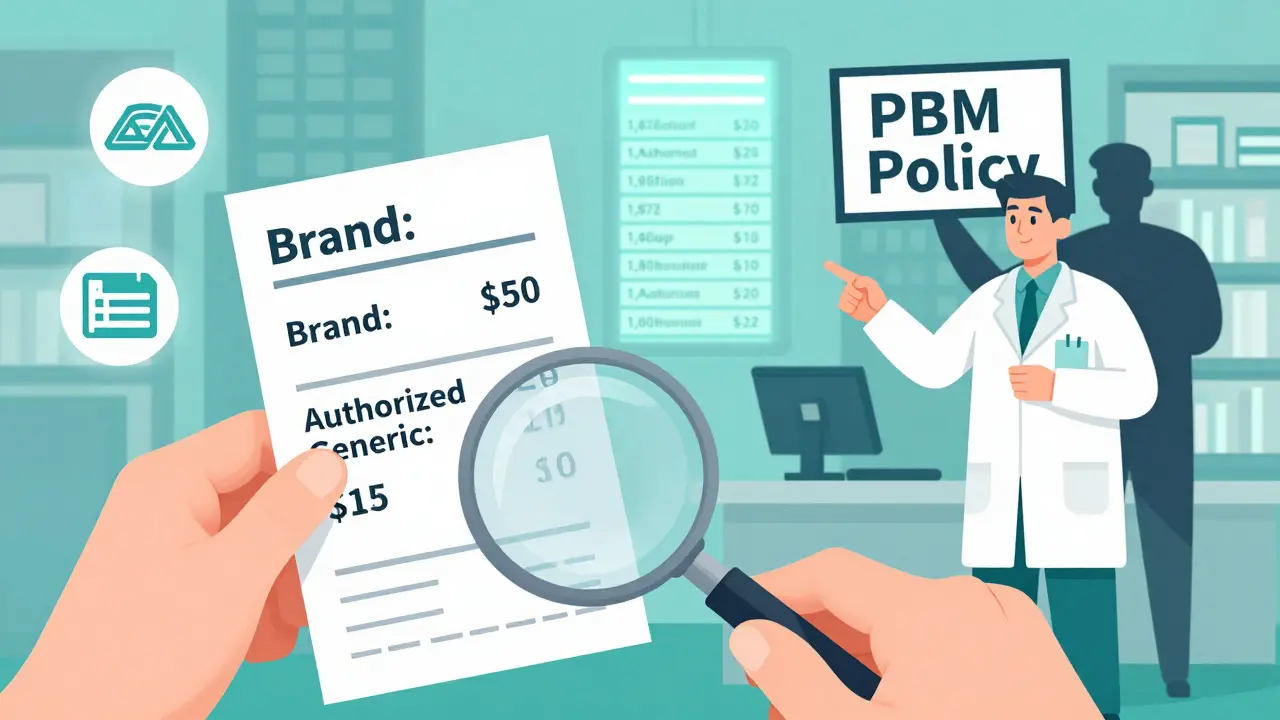
But here’s the catch: insurance companies don’t always treat them the same. Some pharmacy benefit managers (PBMs) still classify authorized generics as "brand" drugs. That means you pay a higher copay-even though the drug is identical. One 2022 investigation by Kaiser Health News found patients paying $50 for an authorized generic while the traditional generic cost $10. Same drug. Different price tag.
Always check your receipt. Ask your pharmacist: "Is this an authorized generic?" If it is, and your insurance is charging you brand pricing, you might be able to switch to the traditional generic-or ask your doctor to write a "dispense as written" note.
Who Uses Authorized Generics-and Why
Patients who’ve had bad experiences with traditional generics are the biggest fans. People with epilepsy, thyroid conditions, or heart disease often stick with the brand-or switch to the authorized generic-because even tiny differences in formulation can affect how well the drug works.
A 2022 survey by the National Community Pharmacists Association found that 67% of independent pharmacists said patients specifically ask for authorized generics when they’re available. Why? Because they trust the exact same formula.
Doctors are catching on too. More are writing prescriptions that say "dispense as written" or "no substitutions"-especially for drugs where consistency is critical. Authorized generics give them a way to honor that request without charging the patient brand-name prices.
And it’s not just older patients. Younger people on expensive specialty drugs-like those for MS, rheumatoid arthritis, or rare cancers-are increasingly turning to authorized generics. These drugs are complex. Small changes in manufacturing can make a big difference. Authorized generics eliminate that risk.
Why the Pharmaceutical Industry Loves (and Fights Over) Authorized Generics
Brand companies don’t launch authorized generics out of generosity. They do it to protect profits.
When a patent expires, the first traditional generic to file an ANDA gets 180 days of exclusive market access. That’s a huge financial incentive. But if the brand company launches an authorized generic at the same time, they split that market. The first generic still gets 180 days-but now they’re competing with a product that’s identical to the brand. That can crush their profits.
A 2022 Health Affairs study found that 38.5% of brand-name drugs had authorized generics launched the same day as the first traditional generic. That’s not coincidence. It’s strategy.
Congressional researchers have warned this practice may discourage generic companies from challenging patents in the first place. If they know a brand will flood the market with an identical product, why risk millions in legal fees?
But here’s the flip side: without authorized generics, some patients wouldn’t get affordable access at all. For drugs where no traditional generic exists yet, authorized generics are the only low-cost option. The FDA says there are 1,872 authorized generic products available in the U.S. as of September 2023. That’s nearly 500 unique active ingredients covered.
What You Should Do as a Patient
Don’t assume all generics are the same. Ask questions.
- When you get your prescription filled, ask: "Is this an authorized generic?"
- If it is, check your insurance copay. Is it higher than expected? Ask if you can switch to the traditional generic instead.
- If you’ve had side effects with traditional generics, ask your doctor if an authorized generic is an option.
- Use the FDA’s List of Authorized Generic Drugs (updated monthly) to verify if your drug has one.
Pharmacists are your best ally here. They know which versions are which. Don’t be shy about asking. You’re not being difficult-you’re being informed.
And if your insurance won’t cover the authorized generic at generic pricing, ask your doctor to write "dispense as written" on the prescription. That tells the pharmacy to give you exactly what’s prescribed-no substitutions. That can protect you from being charged brand prices for a generic drug.
What’s Next for Authorized Generics?
The market is growing. In 2022, authorized generics made up 12.7% of all generic drug units dispensed in the U.S. By 2027, that’s expected to rise to 15.3%. Why? Because more drugs are becoming complex-specialty biologics, injectables, inhalers. For these, formulation consistency matters more than ever. Authorized generics offer a reliable, low-cost option.
Regulators are watching. The FDA is studying their impact on competition. Congress passed a law in 2022 requiring a full report by December 2024. There’s growing pressure to make sure authorized generics don’t stifle competition-but also to make sure patients aren’t left paying more for the same drug.
One thing’s clear: authorized generics aren’t going away. They’re here to stay. And if you’re paying for a brand-name drug, you deserve to know if a cheaper, identical version exists.
Are authorized generics the same as brand-name drugs?
Yes. Authorized generics contain the exact same active and inactive ingredients, are made in the same facility, and follow the same manufacturing process as the brand-name drug. The only difference is the label and packaging. They are not copies-they are the same product sold under a different name.
Why are authorized generics cheaper than brand-name drugs?
They don’t require the same marketing, R&D, or patent protection costs as the brand. The brand company already paid those costs. The authorized generic is just a repackaged version of the same drug, so the savings are passed on to consumers. Prices are typically 15-30% lower than the brand.
Can I trust an authorized generic as much as the brand?
Absolutely. Since they’re made by the same company, using the same formula and process, authorized generics are just as safe and effective. Many patients who had issues with traditional generics (due to different fillers or dyes) prefer authorized generics because there’s no change in formulation.
Why aren’t authorized generics listed in the FDA’s Orange Book?
The Orange Book only lists drugs approved through the ANDA process. Authorized generics are marketed under the original brand’s NDA, so they’re not included. This doesn’t mean they’re less effective-it just means they’re regulated differently. You can verify them using the FDA’s separate List of Authorized Generic Drugs.
Why does my insurance charge me more for an authorized generic?
Some pharmacy benefit managers (PBMs) still classify authorized generics as "brand" drugs because they’re made by the brand company. This is a billing error, not a medical one. Ask your pharmacist to confirm it’s an authorized generic, then request your insurer reprocess the claim as a generic. If they refuse, ask your doctor to write "dispense as written" on the prescription.
How do I find out if my drug has an authorized generic?
Visit the FDA’s official List of Authorized Generic Drugs at https://www.accessdata.fda.gov/scripts/cder/afg/index.cfm. It’s updated monthly and includes the brand name, active ingredient, and the authorized generic version. You can also ask your pharmacist or check GoodRx or Drugs.com for price comparisons.
Oh sweet merciful heavens, another person who thinks "generic" means "I got this from a back-alley chemist in Tijuana"? Please. Authorized generics are the *only* reason I haven’t switched to Canadian insulin. Same factory. Same molecules. Same damn pill. If your body reacts to a different dye, that’s not the drug’s fault-it’s your fragile, over-medicated American psyche.
Let us pause-just for a moment-to reflect on the ontological paradox of the authorized generic: it is, in essence, a brand-name drug that has been exiled from its own identity, stripped of its logo, yet retains every atom of its essence. The FDA, in its bureaucratic wisdom, permits this spectral existence under the NDA, but refuses to acknowledge it in the Orange Book. Is this not the pharmaceutical equivalent of a ghost haunting its own obituary?
I used to be terrified of generics until my mom switched to an authorized version of her thyroid med and didn’t have a single panic attack for six months. I asked my pharmacist why, and she just laughed and said, "It’s the same pill, honey, just in a different box." Sometimes the simplest truths are the ones we ignore the longest.
So the pharma companies are just playing games with us now? Cool. So now they make the brand, then make the generic, then charge you more for the generic because it’s made by the same company? What a surprise. Next they’ll charge extra for the same drug if it’s in a blue pill instead of a white one. I’m just waiting for the "premium generic" with gold foil and a QR code to my doctor’s LinkedIn
Thank you for writing this. I’ve been trying to explain this to my sister for months. She’s on a biologic for RA and was terrified to switch from the brand, even though her insurance was charging her $400 a month. We found the authorized generic-same exact drug, $85. She cried. Not from sadness-from relief. People need to know this exists.
Dear fellow citizens, I must respectfully inquire: Is it not a matter of profound ethical concern that multinational pharmaceutical conglomerates, under the guise of consumer benefit, strategically deploy authorized generics to preemptively neutralize generic market entry, thereby perpetuating a monopoly disguised as competition? The Hatch-Waxman Act, once a beacon of accessibility, now serves as a legal instrument for corporate consolidation. We must demand transparency. We must demand justice. The patient’s health is not a balance sheet item.
Authorized generics? Please. This is a classic pharma psyop. They create the drug, patent it, then manufacture the "generic" themselves to control pricing, suppress competition, and manipulate insurance algorithms. The FDA? Complicit. The pharmacists? Paid shills. You think you’re saving money? You’re being manipulated by the same entity that priced your insulin at $1,000 last year. Wake up.
ok but like… why do they even call it "authorized"? sounds like something your mom says when you’re grounded but she still lets you have ice cream. also, why is the fda website so ugly? i tried to find my drug and it looked like it was coded in 2003. also, i misspelled "pharmacist" but u get the point lol
To everyone who’s ever felt confused, anxious, or even betrayed by the system-this post is for you. You are not alone. You are not silly for asking. You are not being difficult for wanting to know what’s in your body. The fact that you care enough to dig deeper? That’s power. And that’s how change starts-not in Congress, but in pharmacy lines, in quiet conversations with pharmacists, and in the courage to say, "Wait, this doesn’t make sense."
Thank you for writing this. I’m sharing it with my book club.
I’m a nurse and I’ve seen people skip doses because they’re scared of generics. I’ve seen people cry because they can’t afford the brand. I’ve seen them light up when they find out there’s a version that’s literally the same pill but costs 80% less. This isn’t just about drugs-it’s about dignity. You deserve to know what you’re taking. And you deserve to pay what it actually costs. Stop being ashamed to ask. Ask. Ask. Ask.
It is imperative to note that the regulatory distinction between ANDA and NDA pathways is not a mere bureaucratic technicality, but a foundational element of pharmaceutical jurisprudence. The absence of authorized generics from the Orange Book does not imply inferiority; rather, it reflects a distinct legal classification. Patients must be educated accordingly, lest they conflate regulatory nomenclature with therapeutic equivalence.
I’ve been on an authorized generic for my blood pressure med for two years now. Never had an issue. My doctor didn’t even mention it-I just asked the pharmacist one day, "Is this the same as the brand?" She nodded. I didn’t need a lecture. I just needed to know. And now I tell everyone I know. It’s not revolutionary. It’s just… honest.
Wait, so if the brand company makes the authorized generic… does that mean they’re the ones who decided to *not* make a traditional generic? Like… they’re the gatekeepers of affordability? That’s… kind of terrifying. I mean, if they want to, they could just sit on the generic forever and charge $500 for the brand. Is there anything stopping them? Shouldn’t there be a law? Or are we just supposed to be grateful they’re "allowing" us to buy our own medicine?