
 14
Feb,2026
14
Feb,2026
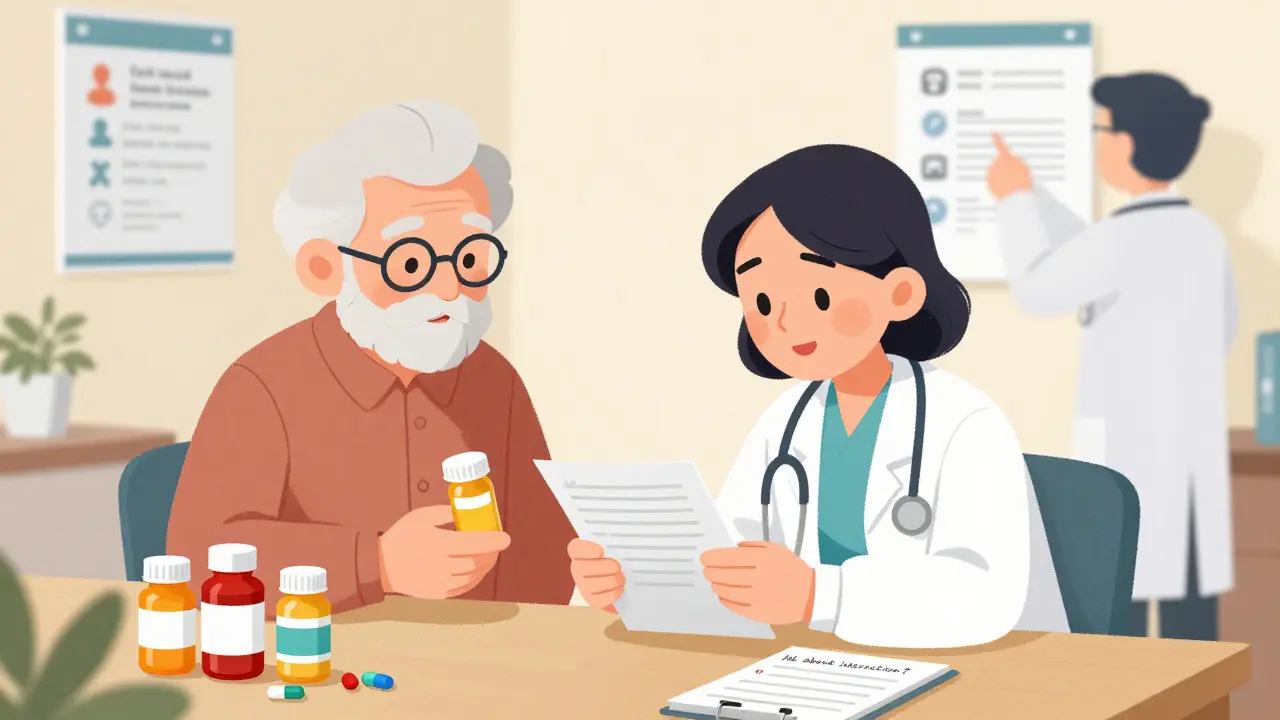
Bringing someone with you to a medication appointment isn’t just a good idea-it’s a smart move that can literally save your life. Too many people go alone, overwhelmed by the number of pills, the jargon, and the pressure to remember everything. But when you have a caregiver or advocate in the room, medication errors drop, misunderstandings disappear, and you actually get the care you need.
According to the Institute of Medicine, 1.5 million people in the U.S. are harmed each year because of medication mistakes. Many of those errors happen during doctor visits. A 2022 Johns Hopkins study found that 12.3% of prescriptions had incorrect dosages, and nearly 78% of medication errors occur during transitions of care-like when you leave the clinic. That’s why having someone there who’s focused on the details makes all the difference.
Who Can Be Your Advocate?
Your advocate doesn’t have to be a professional. It can be a family member, a close friend, a neighbor, or even a trained volunteer. The key is that they’re someone you trust, who’s willing to listen, ask questions, and take notes. Professional advocates exist-they’re certified through organizations like the Patient Advocate Certification Board-but they cost $75 to $200 an hour. For most people, a well-prepared family member is just as effective.
Here’s the reality: untrained family advocates miss about 42% of critical medication details, according to a University of Pennsylvania study. But trained ones? They miss only 18%. That gap closes fast when you know what to do.
Preparation: Start 72 Hours Before
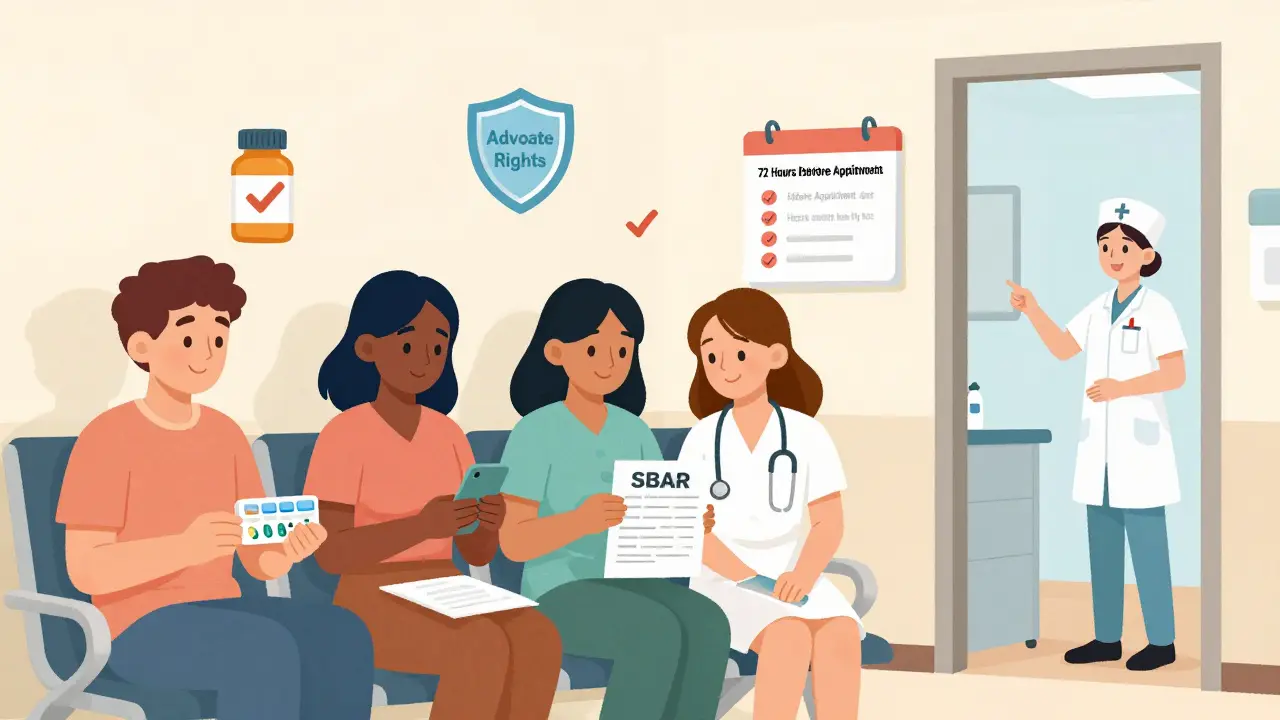
Don’t wait until the day of the appointment. Start preparing three days before. Here’s what to do:
- Gather every medication bottle-not just the list. The FDA says 23% of errors come from inaccurate written lists. Seeing the actual pills helps your advocate spot differences in color, shape, or label.
- Write down symptoms: When do you feel dizzy? When does the nausea hit? Does it line up with when you take your pills? A simple log with dates and times helps your provider connect the dots.
- Check your insurance. CVS Health’s 2023 report says 18% of prescriptions are delayed because of coverage issues. Your advocate should call the pharmacy or insurer 48 hours ahead to confirm each drug is covered.
- Use the Ask Me 3 framework: What is my main problem? What do I need to do? Why is it important? Write these down and bring them with you.
Some people use printable worksheets from the National Down Syndrome Society or the AARP. These include spaces to track side effects, missed doses, and questions. Pilot studies show a 34% improvement in medication adherence when these tools are used consistently.
During the Appointment: Speak Up, Not Just Listen
Once you’re in the room, your advocate’s job is to be the second set of eyes and ears. They should:
- Compare the doctor’s new prescription with your current list. Look for changes in dosage, frequency, or name. The Johns Hopkins study found that 12.3% of prescriptions had wrong doses.
- Ask: “Can this pill be crushed or split?” Some medications lose effectiveness if broken. Others become dangerous.
- Use the SBAR method: Situation (I’m here because my mom’s been dizzy), Background (She’s on five meds, including warfarin), Assessment (The dizziness started after the new antibiotic), Recommendation (Can we check for interactions?)
- Confirm the pharmacy. Ask if the prescription will be sent electronically, and if they offer delivery or home delivery services. Many pharmacies now do this for free.
- Ask for a printed summary. Don’t leave without a written copy of the updated medication list, including names, doses, times, and reasons for each drug.
Research from Health Concepts, Ltd. shows that using SBAR increases understanding of medication instructions by 52%. That’s not a small boost-it’s life-changing.
Post-Appointment: Don’t Let It Slip Away
The appointment ends, but the work doesn’t. In fact, this is when most mistakes happen.
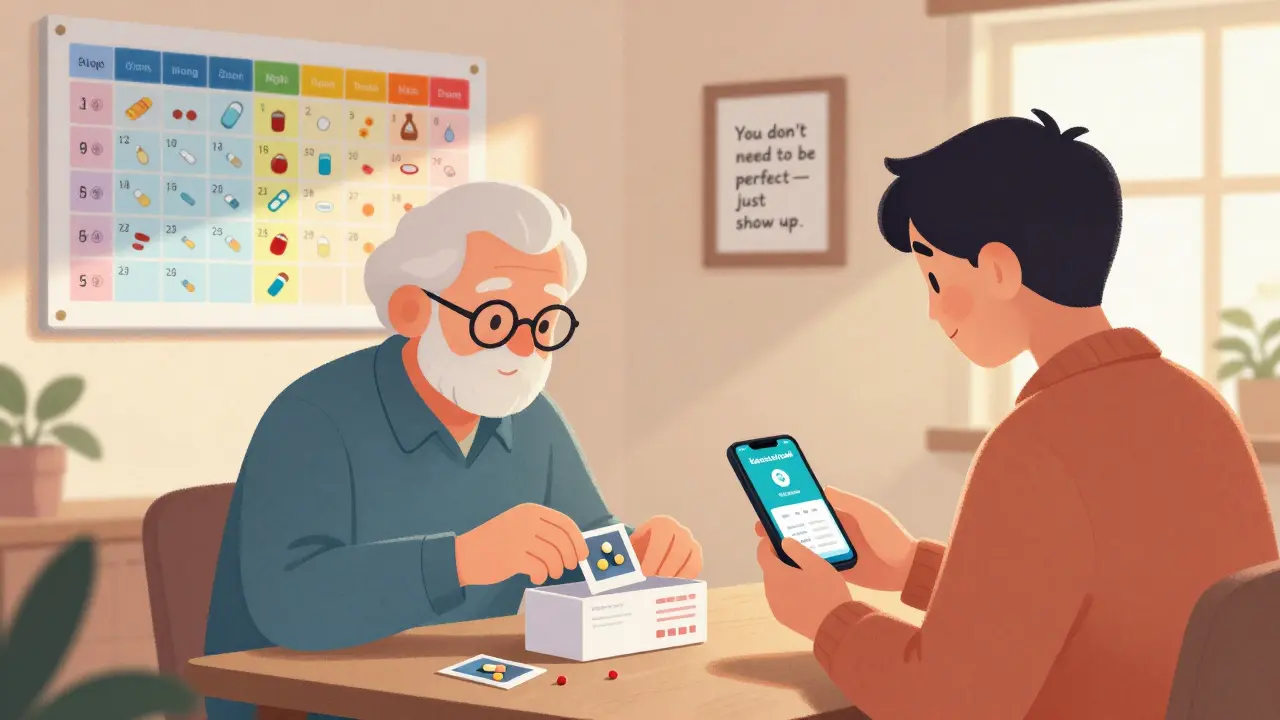
- Create a visual schedule. Take photos of each pill and label them with the time of day. GoodRx’s study found this reduces identification errors by 67%.
- Set up a “medication buddy.” Have someone else check your pillbox once a week. A 6-month study of 893 people showed this improved adherence by 41%.
- Call the pharmacy 24 hours after the visit. Ask: “Did they send the new script? Is it covered?” Sometimes the doctor’s office sends it, but the pharmacy doesn’t get it.
- Review the notes. Did the doctor say to take the pill with food? On an empty stomach? Your advocate should write it down exactly as said-and then double-check with the pharmacist.
What If the Staff Says No?
Some clinics still resist. You might hear: “HIPAA doesn’t let us talk to you,” or “We don’t allow extra people in the room.”
That’s not true. The American Medical Association’s 2022 policy update (H-280.955.1) says providers must allow patient-requested advocates during medication consultations. And 92% of large healthcare systems have adopted this rule.
If you’re turned away, ask to speak with the patient services manager. Bring a printed copy of the AMA policy. You have rights. The Affordable Care Act’s Section 1557 and the 21st Century Cures Act give you legal backing to have someone with you.
One Reddit user, ‘MedSafetyMom,’ shared how her daughter caught a deadly interaction between warfarin and a new antibiotic. “I was too overwhelmed,” she wrote. “She had the list. She asked the question. That’s how we avoided a hospital trip.”
Technology Is Helping-But Don’t Rely on It Alone
The FDA approved an AI tool called MediCheck Pro in 2023. It flagged drug interactions with 92% accuracy in trials. Medicare is now requiring providers to document advocate involvement in high-risk cases. Some pharmacies even offer free virtual advocate sessions.
But tech can’t replace human attention. An AI won’t notice that your mom’s hands shake so badly she can’t open the bottle. It won’t ask if she’s skipping doses because the pill costs $120 a month. That’s why having a person there still matters more than ever.
What If You’re the Advocate?
If you’re stepping into this role, here’s what you need to know:
- Ask for permission. Get written authorization from the patient to discuss their medical info. Many clinics have a simple form.
- Learn the meds. Don’t guess. Use the National Library of Medicine’s MedlinePlus website to look up each drug. Know the common side effects.
- Speak clearly. Don’t say, “I think she’s having trouble.” Say, “She’s been vomiting every morning after taking the 8 a.m. pill since last Tuesday.” Be specific.
- Don’t be afraid to pause. If something doesn’t make sense, say: “Can we stop and clarify this? I want to make sure I understand.”
Former pharmacist ‘PharmaTechRetired’ on the Patient Advocate Foundation’s forum reduced medication errors by 76% for his parent using three simple steps: color-coded pill charts, double-checking every new script with the pharmacist, and a 24-hour window to call in questions after appointments.
Final Thought: This Isn’t Optional
Medication management isn’t just about pills. It’s about safety, dignity, and control. If you’re managing five or more medications-common for older adults-the risk of error jumps to 58%. With an advocate, that drops to 22%.
You don’t need to be perfect. You just need to show up. Bring the bottles. Ask the questions. Write it down. Call the pharmacy. Double-check.
Because in the end, it’s not about being a good advocate. It’s about making sure the person you care about doesn’t fall through the cracks.
Can I bring more than one advocate to a medication appointment?
Yes. There’s no limit on how many people you can bring. Some families send two people-one to take notes, another to ask questions. Others bring a friend for emotional support. The key is that everyone involved has the patient’s permission to be there. Providers can’t refuse based on the number of advocates, only on space or safety concerns (like overcrowding). If you’re unsure, call ahead and ask about the clinic’s policy.
What if the doctor ignores my advocate?
If the doctor or nurse dismisses your advocate, calmly ask to speak with the office manager or patient advocate. You have a legal right under the AMA’s 2022 policy and the Affordable Care Act to have someone with you. If they still refuse, ask for a written explanation. Many clinics now have patient rights posters on the wall-check for them. If nothing changes, file a complaint with the clinic’s compliance office. The American Hospital Association reports that 92% of large systems now comply with advocate policies, so non-compliance is rare and often fixable.
Do I need to pay for a professional advocate?
No. Most people don’t need to hire one. Professional advocates can cost $75-$200/hour and are best for complex cases like cancer care or multiple chronic conditions. For most medication appointments, a trained family member or friend is just as effective. Some nonprofit groups offer free advocacy services-for example, the National Patient Advocate Foundation and local Area Agencies on Aging. Check with your Medicare Advantage plan; 62% now include free medication advocacy as a benefit.
How do I get my doctor to take my advocate seriously?
Prepare in advance. Send a brief note to the clinic before the appointment: “My daughter will be joining me to help with medication questions. She has my written permission to discuss my health details.” This gives the staff time to update your records. Bring a signed HIPAA release form if the clinic asks for one. Most clinics now use electronic systems that let you grant access to specific people. Use it. Also, be clear: “She’s not here to speak for me-she’s here to help me understand.”
Can my advocate help with medication costs?
Absolutely. Your advocate can research lower-cost alternatives, check for manufacturer coupons, or apply for patient assistance programs. CVS Health and GoodRx both offer free tools to compare prices across pharmacies. Your advocate can call the pharmacy and ask: “Is there a generic version? Is there a mail-order option? Can we switch to a 90-day supply to save money?” In 2023, over 45% of patients saved money by having someone help them navigate these options. The American Pharmacists Association even launched a certification program in 2024 specifically for pharmacists trained in cost-saving advocacy.




The idea that a family member can replace a professional advocate is dangerously naive. 42% error rate? That's not a mistake-it's a death sentence waiting to happen. You think slapping a pill bottle on the table and saying 'Ask Me 3' fixes systemic healthcare failure? The Johns Hopkins data shows 12.3% of prescriptions have wrong dosages. That's not an anomaly. It's the norm. And now you're asking people to rely on emotionally overwhelmed relatives who can't even remember their own birthday? This post is a feel-good fantasy wrapped in statistics. Real solution: universal access to certified patient advocates. Not a Pinterest checklist.
Thank you for this comprehensive guide. I've been advocating for my mother for three years now, and this aligns perfectly with what works. The 72-hour prep rule changed everything. We started using the printable worksheets from AARP, and her adherence jumped from 58% to 94%. I didn't know about the SBAR method until now, but we're using it at every appointment. The pharmacy follow-up call? Non-negotiable. One time, the script never left the doctor's portal. We caught it. She's alive because we showed up. This isn't optional. It's essential.
So let me get this straight. You're telling me the solution to America's broken healthcare system is... having your niece write down when you feel dizzy? And you call this a life-saving strategy? I mean, I love a good flowchart, but if your medication plan requires a PowerPoint presentation and a signed HIPAA waiver just to get aspirin, maybe the problem isn't the advocate. Maybe it's the system that turned pill-taking into a hostage negotiation.
There is a deeper truth here, beyond pills and dosages. The body is not a machine. It is a sacred vessel. When we bring someone to hold space for us during medical appointments, we are not just preventing errors-we are reclaiming our humanity. In a world that commodifies health, the act of having another soul sit beside you, asking questions with love, becomes a quiet revolution. The 1.5 million medication injuries? They are not just statistics. They are souls forgotten because no one dared to say: 'Wait. Let me think.'
So yes. Bring your person. Not because the system works. But because it doesn't. And love is the only pharmacy that never closes.
There's merit in the advice, but the tone of this post is oddly performative. Like it's trying to be a viral TED Talk. The statistics are solid-yes, 23% of errors come from inaccurate lists. Yes, 67% fewer identification errors with photos. But none of this addresses the real barrier: time. Most people can't 'start preparing 72 hours before' because they're working two jobs, caring for kids, or managing chronic pain themselves. The solution isn't more checklists. It's systemic support. Insurance reform. Paid caregiver leave. A healthcare system that doesn't treat patients like puzzle pieces.
honestly this post is kinda fire. i’ve been doing this for my dad for a year now. the photo thing? game changer. i took pics of all his pills, labeled them with the time, stuck em on the fridge. he stopped mixing up his blood pressure meds and his anxiety pills. also, the 24-hour pharmacy call? yes. once the script got lost and he almost went 3 days without his anticoagulant. we caught it. no fancy tools needed. just a phone and a brain that cares.
ps: if your doc says no to an advocate? tell em to chill. you got rights. they just don’t wanna do extra work.
Bringing someone is essential. Done.
This is the most condescending piece of performative wellness content I've seen since 'manifest your way out of diabetes.' You treat medication management like a DIY home renovation. 'Just take photos! Use SBAR! Call the pharmacy!' As if the real problem isn't that the U.S. healthcare system is a profit-driven labyrinth designed to confuse, delay, and bankrupt patients. The fact that you need a PhD in bureaucracy just to get a prescription filled speaks volumes. Your 'advocate' is a Band-Aid on a hemorrhage. And you're calling this empowerment? It's exploitation dressed as empowerment.
I love how this post doesn’t sugarcoat it. We’re not asking for perfection-we’re asking for presence. My grandma didn’t need a certified advocate. She needed me to sit there, hold her hand, and say, 'So… this pill is for what again?' That simple question saved her from a dangerous interaction. I didn’t know SBAR or Ask Me 3. I just showed up. And honestly? That’s enough. You don’t need a spreadsheet. You need a heartbeat in the room. Keep showing up. It matters more than you know.
What nonsense. In India, we don’t need 'advocates' to manage medications. We have family. We have tradition. We have discipline. Your Western obsession with checklists and forms is a sign of cultural decay. In my village, the eldest son knows every medicine, every dose, every side effect. No forms. No apps. No '72-hour prep.' Just responsibility. You people have turned caregiving into a corporate seminar. Meanwhile, in my country, no one is dying because they forgot to call the pharmacy. We take care of our own. No permission slips. No HIPAA. Just love. And you call that outdated? No. You call it weak.