 23
Apr,2026
23
Apr,2026
Medication Timing & Interaction Planner
1. Set Your Sequestrant Time
2. Select Other Medications
Click to select medications you are taking.
Your Recommended Schedule
| Medication | Safe Window | Guidance |
|---|
How They Actually Work in Your Body
To understand why these drugs help with diabetes, you have to look at how your liver handles fat. Normally, your liver makes bile acids from cholesterol to help you digest food. These acids then travel through your intestines and get recycled back into the liver. Bile Acid Sequestrants break this cycle. They act like a sponge, soaking up those bile acids and carrying them out of your body as waste.
When the liver realizes it's losing bile acids, it panics and starts churning out more. To do this, it needs more raw material, so it pulls LDL cholesterol (the "bad" kind) out of your blood to fuel the process. This is why your cholesterol numbers drop. Interestingly, this process also triggers signaling pathways involving receptors like FXR and TGR5, which helps your body manage glucose better. It's a roundabout way of lowering blood sugar, but for people who also have dyslipidemia, it's a strategic move.
Common Options and Their Impact
You won't find a dozen different versions of these drugs. Most people in the diabetes space are talking about Colesevelam (brand name WelChol). It was approved specifically for diabetes in 2008 and is usually added to a regimen that already includes metformin. Then there is Sevelamer, which is often used for kidney-related phosphate issues but shows similar glucose-lowering effects.
| Feature | Colesevelam (WelChol) | Sevelamer (Renvela) | |
|---|---|---|---|
| FDA Approval for Diabetes | Yes (Approved 2008) | No (Used off-label) | |
| Typical Glucose Impact | HbA1c reduction ~0.5% | Modest reduction | |
| LDL Cholesterol Drop | ~15-18% reduction | Significant reduction | |
| Main Use Case | T2D with high cholesterol | Hyperphosphatemia / Renal care |

The Trade-off: Side Effects and Tolerability
Let's be honest: the biggest hurdle with these resins is the "gut factor." Because they bind to things in your intestines, they can cause a lot of commotion in your digestive tract. About 20-30% of users report significant gastrointestinal issues. The most common culprit is constipation-some users describe it as severe enough to require daily stool softeners or Miralax just to keep things moving. Bloating, gas, and nausea are also frequent complaints.
Then there is the texture. Many patients describe the medication as having a "chalky" or "gritty" feel that makes it hard to swallow. Because of this, adherence isn't great; around 35% of people stop taking them within six months. If you're starting out, don't jump straight into the full dose. Most doctors suggest starting with three tablets (1,875 mg) and slowly ramping up to six (3,750 mg) over a month to let your stomach adjust.
Navigating Dangerous Drug Interactions
This is the part where you have to be extremely careful. Because these drugs are designed to bind to substances in your gut, they don't just bind to bile acids-they can bind to your other medications, stopping your body from absorbing them. This can make your other life-saving drugs effectively disappear.
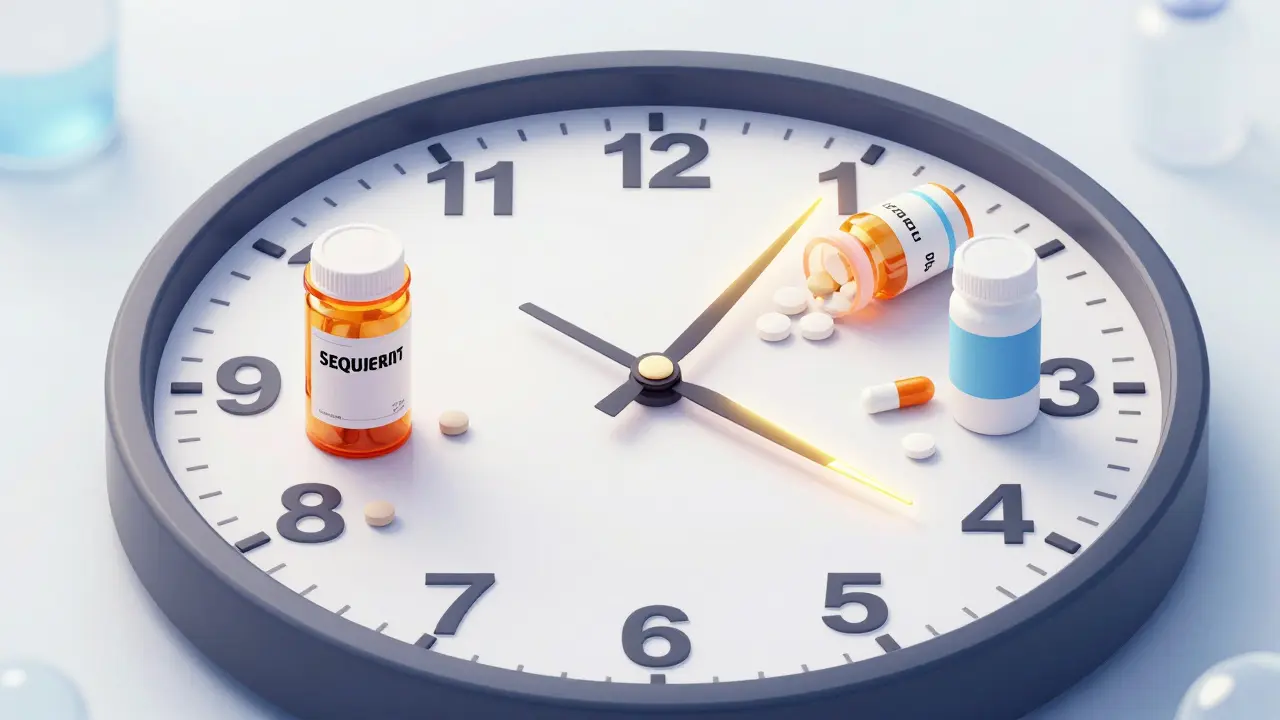
The gold standard rule is the 4-1 rule: take other medications at least 4 hours before or 1 hour after your sequestrant. If you're taking Thyroid Hormones, you may need a gap of up to 6 hours. If you're on Warfarin, you need close monitoring of your INR because the resin can mess with how your blood clots.
Even statins aren't safe from this. For instance, colesevelam can reduce the effectiveness of simvastatin by about 40%. This doesn't mean you can't take them together, but it means your doctor might need to tweak your doses to make sure you're actually getting the benefit of both medications.
Is It Still Relevant in 2026?
With the rise of "blockbuster" drugs like GLP-1 agonists (think Ozempic or Mounjaro) and SGLT2 inhibitors, bile acid sequestrants have moved to the sidelines. The newer drugs are simply more powerful; while a sequestrant might lower your HbA1c by 0.5%, some GLP-1s can push it down by 1.5% while also helping you lose weight.
So, who is this for? These drugs are now a "niche" choice. They are perfect for the person who has mild hyperglycemia and high cholesterol but cannot tolerate statins (perhaps due to muscle pain) and doesn't want-or can't afford-the newer injectable medications. They provide a steady, modest benefit without the risk of hypoglycemia (dangerously low blood sugar) or weight gain, which makes them a safe, if less potent, addition to a treatment plan.
Do bile acid sequestrants cause weight gain?
No, unlike some other diabetes medications (such as certain sulfonylureas or insulin), bile acid sequestrants are generally weight-neutral. They do not cause weight gain, which is a benefit for patients already struggling with weight management in type 2 diabetes.
How do I handle the severe constipation caused by WelChol?
The best way to manage this is by significantly increasing your daily water intake and eating more fiber. Many healthcare providers suggest a gradual dose titration-starting with a low dose and increasing it over four weeks. If symptoms persist, consult your doctor about using a gentle osmotic laxative.
Can I take my metformin at the same time as my bile acid sequestrant?
It is not recommended. Because these resins bind to other drugs, they can reduce the absorption of metformin. You should follow the "4-1 rule": take your metformin at least 4 hours before or 1 hour after taking your sequestrant to ensure you get the full dose of your diabetes medication.
Are these drugs better than statins for cholesterol?
Generally, no. Statins are much more powerful at lowering LDL cholesterol (often 30-50% reduction) compared to the 15-18% seen with sequestrants. However, sequestrants are an excellent alternative for people who experience statin-associated muscle soreness (myopathy).
Who should absolutely avoid bile acid sequestrants?
These medications are contraindicated for anyone with a complete biliary obstruction (blockage of the bile ducts) or bowel obstruction. Additionally, people with serum triglycerides exceeding 500 mg/dL should avoid them as they may worsen the condition.
Next Steps for Patients
If you are starting a bile acid sequestrant, start a medication log. Track exactly when you take your other pills to ensure you're maintaining that critical 4-hour window. If you notice your digestion slowing down too much, don't just suffer through it-reach out to your provider to discuss fiber supplements or dose adjustments. For those who find the tablets too difficult to handle, ask your doctor if there are alternative formulations or if a different class of lipid-lowering drug might be more appropriate for your specific lifestyle.