
TSA Medication Rules: What You Can Bring on a Plane
When you’re flying with medications, you’re dealing with TSA medication rules, the official guidelines from the Transportation Security Administration about what drugs and medical supplies are allowed through airport security. Also known as air travel drug policies, these rules exist to keep flights safe while letting people bring the medicines they need to stay healthy. You don’t need to dump your pills into a plastic bag or leave your insulin at home. The TSA lets you carry prescription drugs, over-the-counter meds, and even medical devices like syringes—just as long as you know how to pack them right.
Many people worry about liquid meds, but the TSA doesn’t treat them like regular liquids. If you need insulin, eye drops, or liquid painkillers, you can bring more than 3.4 ounces in your carry-on, as long as you tell the officer at the checkpoint. You don’t have to put them in a quart-sized bag, but you should keep them separate so they’re easy to inspect. The same goes for pills, patches, and inhalers—they’re all fine in any quantity. The real rule? Don’t hide them. If you’re carrying meds, be ready to show them. A prescription label helps, but it’s not required. The TSA isn’t checking for valid prescriptions—they’re checking for safety risks, not pharmacy compliance.
What about medical devices? Need a nebulizer? A glucose monitor? A portable oxygen concentrator? All allowed. You can bring them through security without extra fees or paperwork. Just let the agent know you’re carrying medical equipment. Same goes for sharps like needles and lancets. You can carry them in your carry-on if they’re in a sharps container. No need to ship them ahead or mail them. Just pack them safely and say something like, "I need these for my diabetes." Most agents have seen it before.
Some travelers get tripped up by international flights. TSA rules only apply to U.S. airports. If you’re flying from Canada, the UK, or Australia, each country has its own rules. But if you’re flying into or out of the U.S., TSA’s guidelines are what matter. And if you’re crossing borders with controlled substances—like opioids or strong anxiety meds—you might need a doctor’s letter. That’s not a TSA rule, but a customs rule. The TSA won’t stop you for having oxycodone, but U.S. Customs might ask questions if you’re carrying a month’s supply without documentation.
There’s no magic list of approved drugs. The TSA doesn’t ban meds based on name or use. They care about how they’re packed, not what’s inside. A bottle of ibuprofen? Fine. A jar of CBD oil? Also fine, as long as it’s derived from hemp and has less than 0.3% THC. A vape pen with nicotine? Allowed, but not in checked bags. That’s a fire risk, not a drug rule. The confusion often comes from mixing up TSA rules with airline policies or state laws. TSA doesn’t care if your meds are legal in California or Florida. They care if you’re trying to sneak in something dangerous—like a large bottle of liquid that could be used as a weapon.
You’ll find plenty of advice online saying you must carry meds in original bottles. That’s not true. You can transfer pills to a pill organizer, use a blister pack, or even put them in a ziplock. No one’s going to check your pharmacy label. But if you’re flying with a lot of pills—say, more than a 30-day supply—it’s smart to bring a note from your doctor. Not because TSA requires it, but because it avoids awkward questions if your bag gets searched. Same with injectables. If you’re carrying 10 syringes, a doctor’s note helps. It’s not a rule. It’s common sense.
What you’ll find in the posts below are real, practical guides from people who’ve been there: how to pack insulin for a cross-country flight, what to do if your meds get confiscated, why some pharmacies won’t refill your prescription before travel, and how to handle TSA agents who don’t know the rules. You’ll see how others dealt with anxiety meds on international trips, how to fly with injectables without stress, and what to say when an officer says, "I’ve never seen this before." These aren’t legal opinions. They’re lived experiences—clear, no-fluff advice from travelers who got it right.
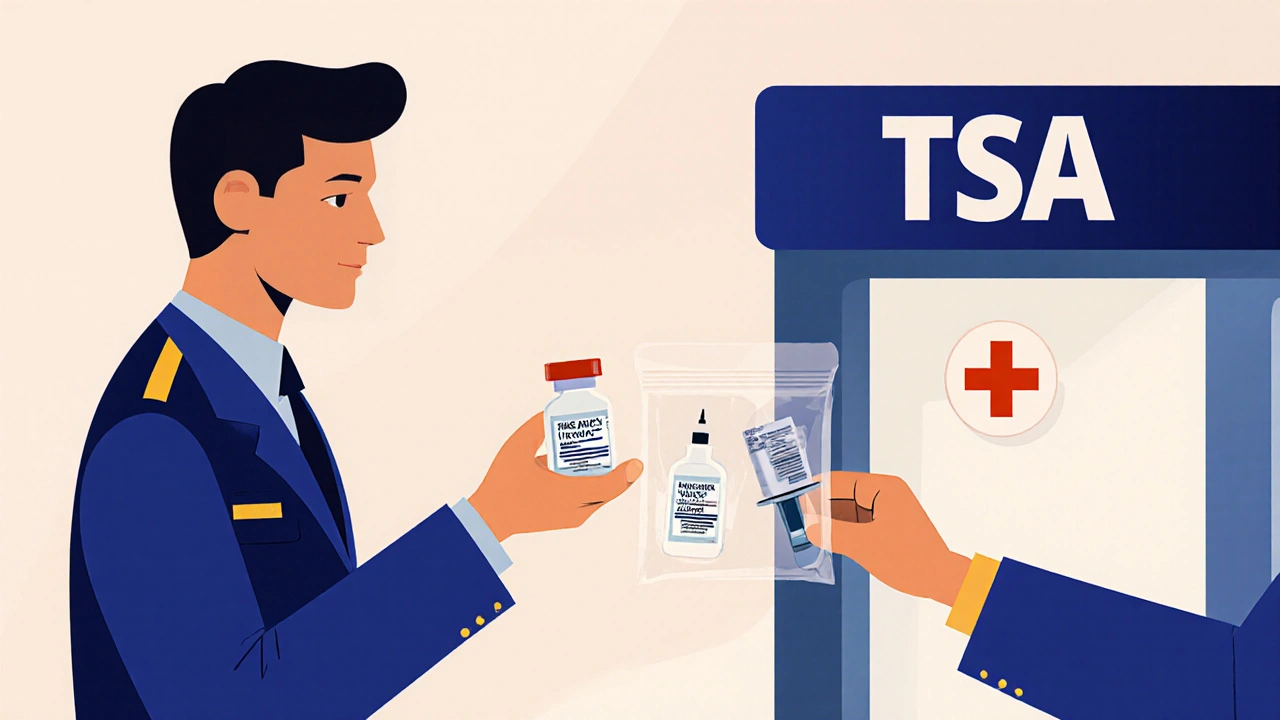
How to Clear Airport Security with Liquid Medications and Supplies
Learn how to pass airport security with liquid medications like insulin, EpiPens, and prescription liquids without delays. Follow TSA’s 2025 rules, packing tips, and expert advice to avoid common mistakes.
View more