
SSRIs: What They Are, How They Work, and What You Need to Know
When you hear SSRIs, Selective Serotonin Reuptake Inhibitors are a class of medications primarily used to treat depression and anxiety by increasing serotonin levels in the brain. Also known as antidepressants, they’re among the most prescribed mental health drugs in the world. But they’re not magic pills. They don’t make you happy overnight. They help your brain regain balance—slowly, sometimes painfully, but often effectively.
SSRIs work by blocking the reabsorption of serotonin, a chemical your brain uses to regulate mood, sleep, and stress. More serotonin available means better communication between nerve cells. That’s the theory, anyway. Real people report mixed results: some feel like themselves again in weeks, others wrestle with nausea, weight gain, or emotional numbness. And it’s not just about depression. Doctors use SSRIs for OCD, PTSD, panic attacks, and even chronic pain. The science behind them is solid, but the experience? That’s personal.
What you won’t find in ads is how often SSRIs fail—or how long it takes to know if one works. Most people need 4 to 6 weeks before they feel any change. And if one doesn’t help, you might need to try another. Not because you’re broken, but because everyone’s brain chemistry is different. Some SSRIs are gentler on the stomach. Others cause less sexual side effects. A few are easier to stop without withdrawal. The differences matter, even if they’re subtle.
It’s also worth knowing SSRIs don’t work alone. Therapy, sleep, movement, and diet all play roles. One study tracked people on SSRIs who added daily walks—those who moved regularly saw better results than those who didn’t. No drug replaces lifestyle, but when combined, they stack up. And if you’re on SSRIs long-term, you’ll likely need regular check-ins with your doctor. Blood pressure, liver function, and even bone density can be affected over time. It’s not scary, but it’s not something to ignore.
There’s a lot of noise out there about SSRIs—some say they’re overprescribed, others call them lifesavers. The truth? They’re tools. Useful for many, useless for some, harmful for a few. What matters is knowing your own body, asking the right questions, and not giving up if the first one doesn’t click. Below, you’ll find real-world guides on how SSRIs interact with other meds, how they affect sleep, what to watch for when switching, and how to tell if they’re actually helping—or just masking the problem.
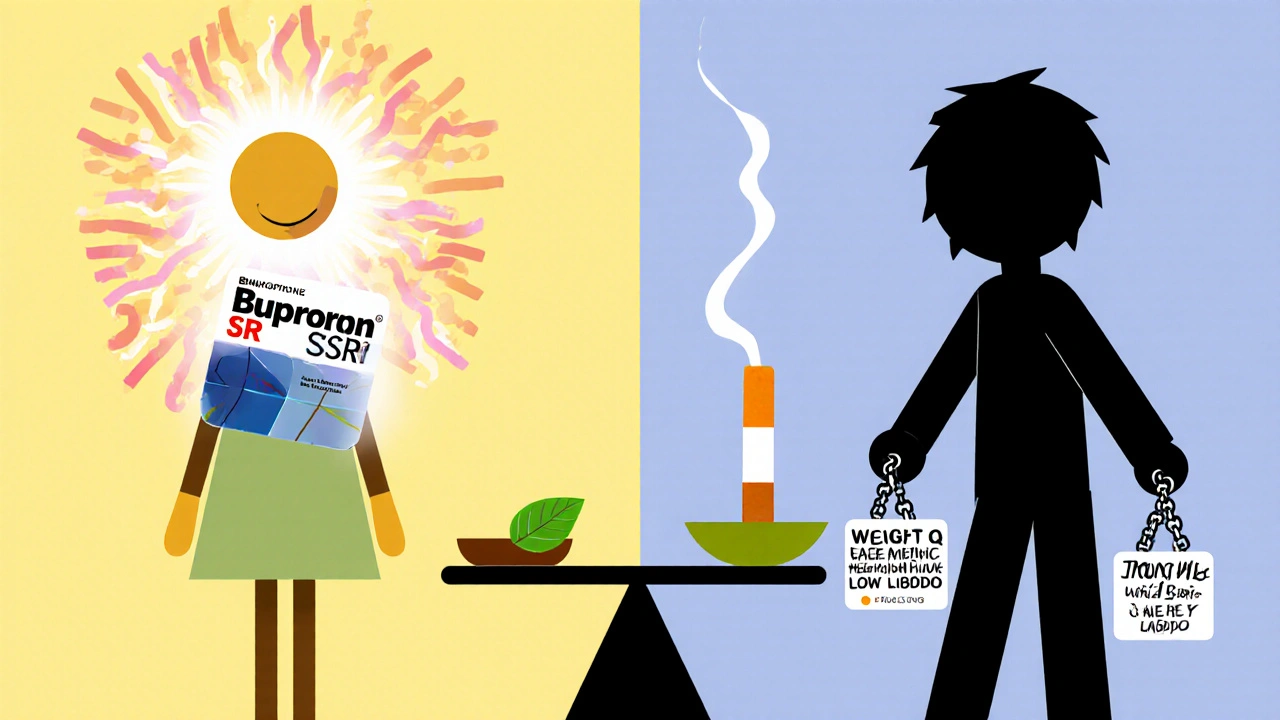
Compare Bupron SR (Bupropion) with Alternatives for Depression and Smoking Cessation
Compare Bupron SR (bupropion) with alternatives like SSRIs, SNRIs, and varenicline for depression and smoking cessation. Learn which works best for energy, weight, and quitting smoking in Australia.
View more