
Skin Reaction to Medicine: What It Is, Why It Happens, and What to Do
When your body responds to a medicine with a rash, itching, or swelling, you’re experiencing a skin reaction to medicine, an immune or toxic response triggered by a drug that shows up on the skin. Also known as a drug rash, it’s one of the most common reasons people stop taking a prescribed medication. It doesn’t always mean you’re allergic—sometimes it’s just your body’s way of saying the drug doesn’t agree with you.
These reactions can come from almost any drug, but some are more likely to cause them. Antibiotics like penicillin and sulfa drugs, NSAIDs like ibuprofen, seizure meds like phenytoin, and even some antidepressants can trigger skin changes. The symptoms vary: a red, itchy patch might appear within hours, or a full-body rash could develop days later. In rare cases, a skin reaction to medicine turns into something serious like Stevens-Johnson syndrome or toxic epidermal necrolysis—conditions that need emergency care. If you notice blisters, peeling skin, fever, or trouble breathing along with a rash, don’t wait—get help right away.
Not every rash from a drug is dangerous, but it’s not something to ignore either. Many people think if it’s not life-threatening, they can just tough it out. But stopping a medication without talking to your doctor can be risky too. Some reactions get worse the longer you keep taking the drug. Others, like photosensitivity, mean your skin burns easier in the sun—something you might not connect to your pill until it’s too late. The key is recognizing the pattern: did the rash show up after you started a new medicine? Did it get worse after you took another dose? That’s your clue.
Doctors often use a process of elimination to figure out what’s causing the reaction. They’ll look at your full list of meds, including supplements and over-the-counter drugs. Sometimes they’ll ask you to stop one drug at a time to see if the rash clears up. In more serious cases, they might refer you for allergy testing. But even without tests, a clear timeline and symptom description can point to the culprit. And if you’ve had a skin reaction to one drug before, you’re more likely to react to others in the same class—like if you had a rash with amoxicillin, you might react to other penicillin-based antibiotics too.
What you’ll find in the posts below are real cases, practical advice, and clear explanations about how medicines affect your skin. You’ll learn how to tell the difference between a harmless irritation and a red flag, what to do when you spot a rash, and how to talk to your pharmacist or doctor without sounding alarmist. There’s no guesswork here—just facts from people who’ve been there, and experts who’ve seen it all.
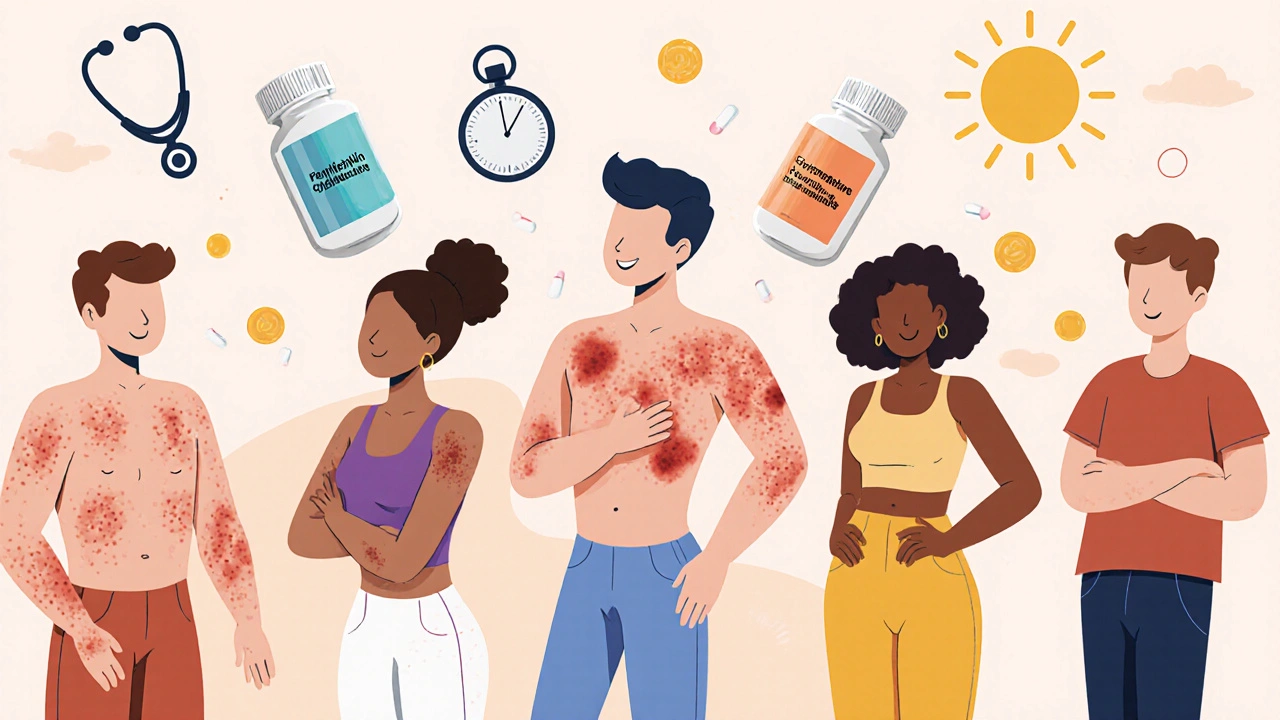
Skin Rashes and Medication-Induced Dermatitis: What Patients Should Know
Learn how to recognize, respond to, and prevent skin rashes caused by medications. Understand which drugs are most likely to trigger reactions and when to seek emergency care.
View more