
Pain Catastrophizing: What It Is and How It Affects Your Health
When you're in pain, it's normal to feel frustrated. But pain catastrophizing, a mental pattern where pain feels overwhelming, uncontrollable, and terrifying. It's not just being dramatic—it's a measurable brain response that makes pain feel sharper and last longer. People who catastrophize pain often fixate on it, imagine the worst outcomes, and feel helpless. This isn’t weakness. It’s a real psychological and neurological reaction that can turn a mild ache into a life-disrupting experience.
chronic pain, pain that lasts beyond normal healing time often feeds into pain catastrophizing, and vice versa. The more you worry about pain, the more your brain becomes wired to expect it, making you more sensitive to even small discomforts. This loop can make medications less effective—like when someone on opioids still feels unbearable pain because their mind is amplifying it. pain perception, how your brain interprets signals from your body isn’t just about nerves—it’s shaped by fear, past trauma, stress, and even how others respond to your pain. If you’ve ever felt like no one understands your pain, that isolation can make catastrophizing worse.
This is why treatments that only target the body—like higher doses of painkillers or physical therapy alone—often fall short. Real progress comes when you address both the physical and mental sides. Studies show that people who learn to reframe their thoughts about pain, even without eliminating the source, report better function and less suffering. Techniques like mindfulness, cognitive behavioral therapy, and even simple breathing exercises can break the cycle. It’s not about ignoring pain. It’s about stopping the story your brain tells about it.
What you’ll find here are real, practical guides on how pain catastrophizing shows up in everyday health situations—from how certain drugs affect your mood and pain sensitivity, to how stress and sleep interact with chronic conditions. You’ll see how genetic factors, medication side effects, and even mental health treatments tie into this pattern. Whether you’re managing long-term pain, supporting someone who is, or just trying to understand why pain feels so heavy sometimes, these posts give you tools—not just theory.
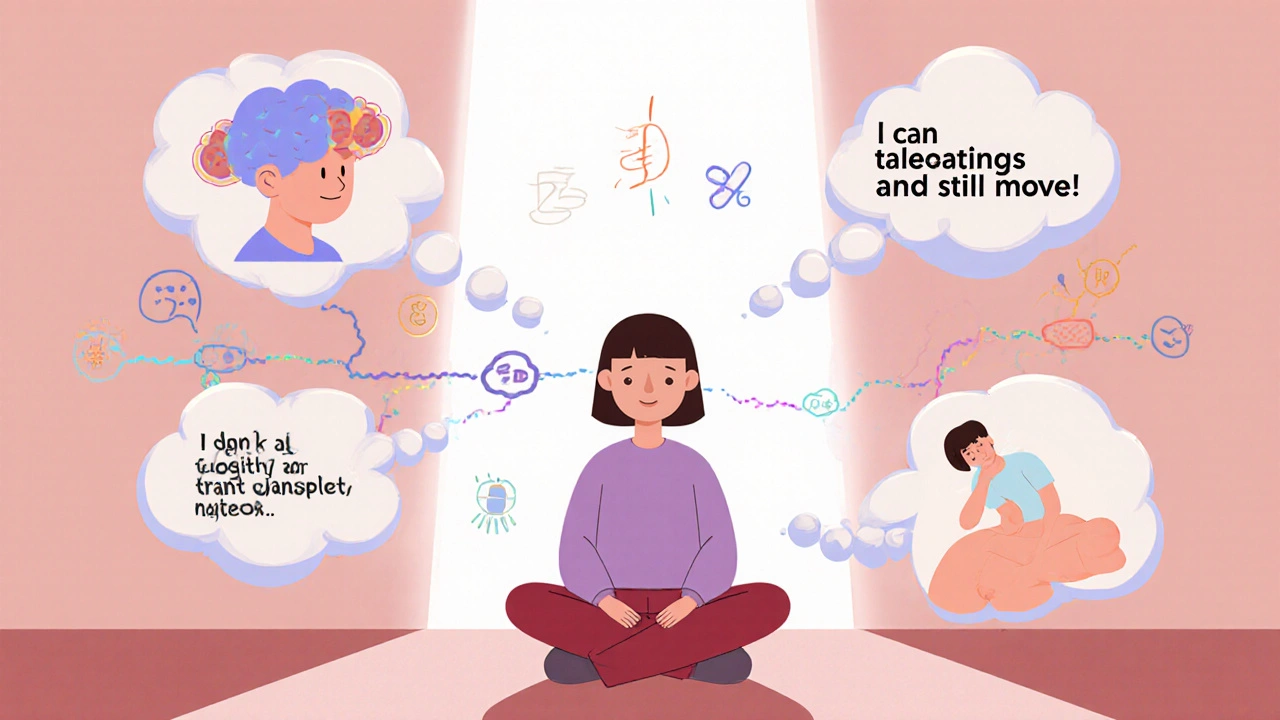
CBT for Chronic Pain: How Cognitive-Behavioral Therapy Helps Manage Persistent Pain
CBT for chronic pain helps manage persistent pain by changing how you think and respond to it. Learn how it reduces anxiety, improves function, and cuts opioid use-without eliminating pain.
View more