
Generic Pharmaceuticals: What They Are, How They Work, and Why They Matter
When you hear generic pharmaceuticals, lower-cost versions of brand-name drugs that contain the same active ingredient, dosage, and intended use. Also known as generic drugs, they are the backbone of affordable healthcare in the U.S. and around the world. Most people assume they’re just cheaper copies—but that’s not the whole story. A generic drug isn’t just a copy of a pill. It has to meet the same strict standards as the original, including how your body absorbs it, how long it lasts, and whether it works the same way. The FDA, the U.S. agency that approves drugs for safety and effectiveness doesn’t just rubber-stamp generics. They test them, compare them side-by-side with brand drugs, and require proof that they deliver the same results in your bloodstream. This is called bioequivalence, the scientific standard proving a generic drug performs the same as the brand version in the body. If it doesn’t meet that bar, it doesn’t get approved.
But not all generics are easy to make. Simple pills? Easy. Complex ones—like inhalers, creams, or injectables that act locally in the lungs, skin, or joints—are much harder to copy. That’s because their effectiveness doesn’t just depend on what’s in the drug. It depends on how it’s delivered. A generic inhaler might have the same chemical as the brand, but if the spray pattern, particle size, or nozzle design is even slightly off, it won’t reach the right part of your lungs. That’s why some generics fail testing. And that’s why you’ll see headlines about drug shortages or pricing pressure—manufacturers can’t always make these complex generics profitably, especially when the brand-name drug’s price is already low. This isn’t about cutting corners. It’s about science that’s still catching up to the complexity of modern medicine.
What does this mean for you? If you’re taking a generic drug, you’re not getting a second-rate product. You’re getting a drug that’s been proven to work just like the brand, often at a fraction of the cost. But you should also know that not all generics are created equal—especially when it comes to tricky formulations. That’s why checking your prescription at the pharmacy, understanding FDA safety alerts, or knowing how to spot a drug interaction matters. The posts below cover real-world cases: why some people react badly to generics, how patent laws keep prices high even after generics are available, and how genetic differences can change how your body handles the same pill. You’ll find guides on checking your meds at the pharmacy, understanding why some drugs are hard to copy, and how supply chains affect what’s on the shelf. This isn’t theory. It’s what’s happening in your medicine cabinet right now.
Future Economic Trends: Forecasts for Generic Drug Markets
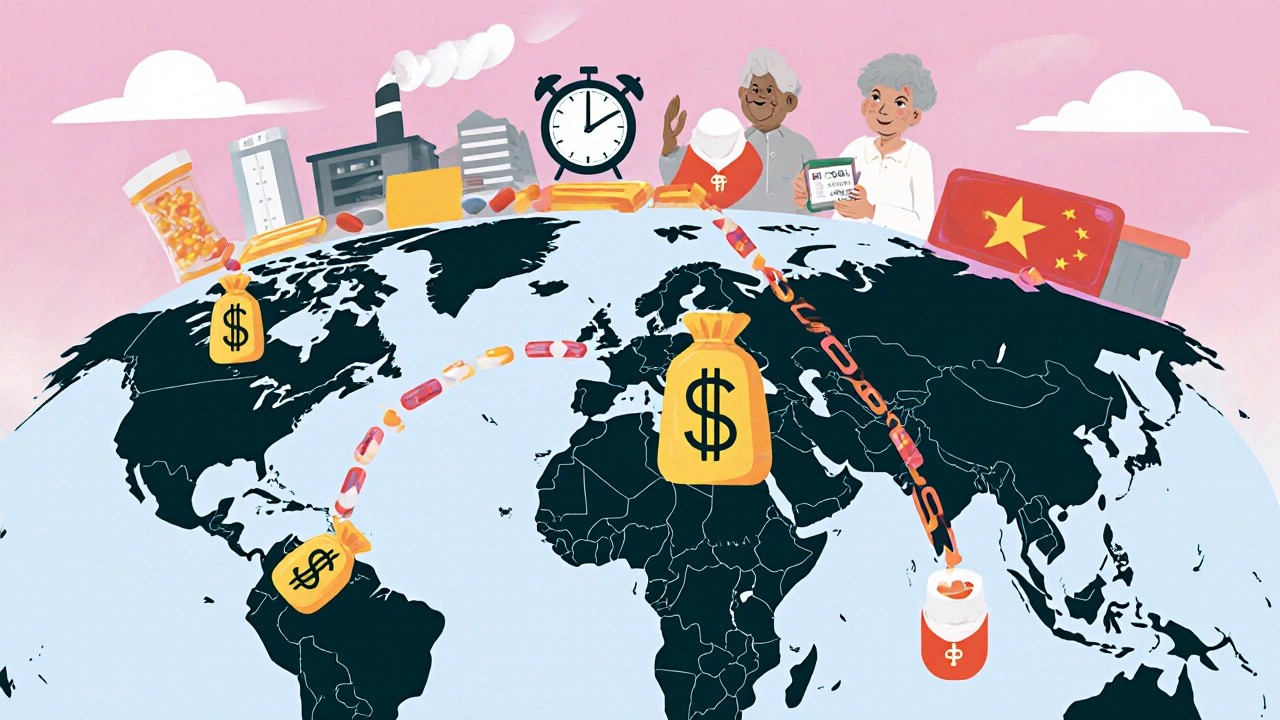
The global generic drug market is set to grow to over $700 billion by 2030, driven by patent expirations, aging populations, and cost-saving policies. Learn how biosimilars, India and China's manufacturing power, and regulatory shifts are reshaping affordable healthcare.
View more